Types of Septic Systems Used in Renfrew County
Not all septic systems are the same. The right system for a property depends on soil conditions, lot size, water table depth, bedrock depth, and the number of bedrooms in the home. In Renfrew County, the most common systems fall into three categories:
Conventional Gravity-Fed Systems
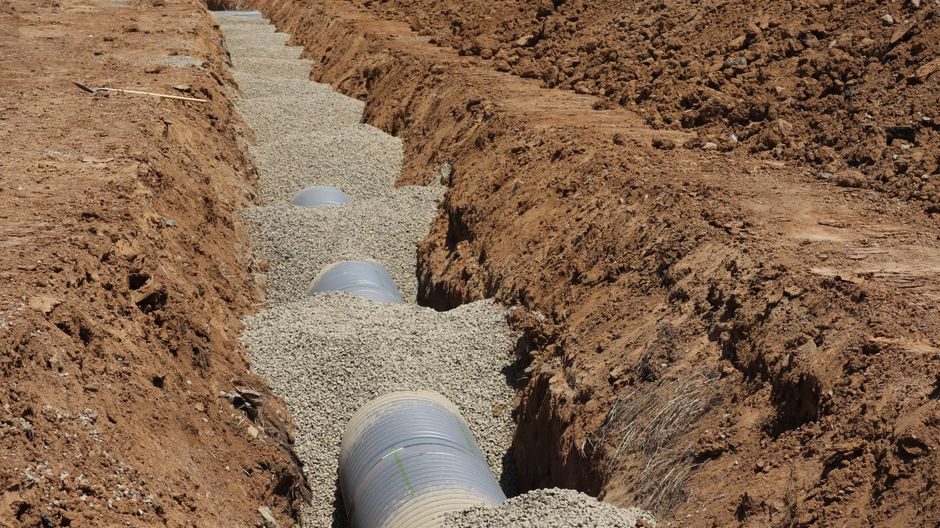
A conventional system consists of a septic tank connected to a buried leaching bed (tile field) by gravity flow. Wastewater flows from the house into the septic tank where solids settle and scum floats. The liquid effluent then flows by gravity into a network of perforated pipes buried in gravel trenches, where natural soil treatment occurs. Conventional systems work best on properties with at least 3 to 4 feet of suitable soil above the water table or bedrock. These are the most affordable option, typically ranging from $5,000 to $12,000 for a three-bedroom home in Renfrew County.
Raised Bed (Mound) Systems
When the natural soil is too shallow over bedrock — a very common situation in Renfrew County's Canadian Shield terrain — a raised bed system is often the solution. Instead of burying the leaching bed in native soil, the tile field is constructed in a sand mound built above the natural grade. Effluent is pumped up into the mound and filters down through engineered sand layers before reaching the native soil. Raised bed systems are more expensive, typically $12,000 to $25,000, and require a pump chamber and electrical connection. They are common in the Madawaska Highlands near Barry's Bay, Bancroft-adjacent areas, and parts of Killaloe and Eganville where bedrock is close to the surface.
Pressure Distribution Systems
Some conventional and raised bed systems use pressure distribution rather than gravity flow. A pump sends effluent through the distribution pipes under pressure, ensuring even dosing across the entire leaching bed. This is beneficial when soils have variable percolation rates or when the tile field is large. Pressure distribution is sometimes required by the Ontario Building Code for certain site conditions. The added pump and controls increase the system cost by approximately $1,500 to $3,000 over a gravity-fed equivalent.
Site Assessment Requirements
Before any septic system can be installed in Renfrew County, a site assessment must be performed. This is a regulatory requirement under Part 8 of the Ontario Building Code. The assessment includes:
- Percolation (perc) test: Measures how quickly water moves through the soil at the proposed leaching bed location. Sandy soils in the Ottawa Valley near Pembroke, Petawawa, and Cobden typically perc quickly. Heavier clay or silty soils in other areas perc more slowly and require larger tile fields.
- Deep test pit: A backhoe excavates a pit to the depth of the proposed leaching bed to reveal the soil profile, depth to bedrock, and depth to the seasonal water table. This is critical in Renfrew County where bedrock can be within 24 inches of the surface.
- Setback verification: The installer must confirm minimum setbacks from wells, surface water, property lines, and buildings. The Ontario Building Code requires at least 15 metres from a drilled well, 30 metres from surface water, and 3 metres from property lines.
The results of the site assessment determine the system class, size, and design. A property that looks suitable for a conventional system on paper may require a raised bed system once the test pit reveals shallow bedrock or a high water table.
Canadian Shield Bedrock Challenges
The Canadian Shield is the dominant geological feature in Renfrew County. The Shield's granite bedrock can be as shallow as 12 inches below the surface in some areas — far too shallow for a conventional leaching bed, which typically requires 36 to 48 inches of suitable soil. When the test pit reveals bedrock within 3 feet of the surface, the Building Code requires an alternative system design. Raised bed systems are the most common solution, but in extreme cases where even a raised bed cannot achieve adequate treatment depth, a holding tank may be the only option. Properties in areas with known shallow bedrock — such as Barry's Bay, Combermere, and the Madawaska Valley — should expect to budget for a raised bed system.
System Sizing by Bedroom Count
The Ontario Building Code sizes septic systems based on the number of bedrooms in the home. More bedrooms mean more potential occupants and higher wastewater volumes. The following are general sizing guidelines:
- 2-bedroom home: 1,000 gallon tank minimum; smaller leaching bed
- 3-bedroom home: 1,500 gallon tank typical; standard leaching bed size
- 4-bedroom home: 2,000 gallon tank; larger leaching bed required
- 5+ bedroom home: 2,500+ gallon tank; proportionally larger leaching bed
These are general guidelines. The actual leaching bed size is calculated using the perc test results and the daily design flow. Homeowners planning future additions should oversize the system at initial installation to avoid costly upgrades later.
Sizing for Future Expansion
If you plan to add bedrooms or an in-law suite in the future, consider installing a larger septic system at the outset. Retrofitting an undersized system later is far more expensive than sizing up during initial installation. Discuss future plans with your contractor and the Renfrew County Building Department during the permit stage.
Permit Requirements
All new septic system installations in Ontario require a permit before any work begins. In Renfrew County, the Building Department handles septic permits under Part 8 of the Ontario Building Code. The homeowner or their authorized contractor submits an application with the site assessment results, system design drawings, and the required fee. The Building Department reviews the design, issues the permit, and conducts inspections during installation. Operating without a permit is a violation of the Building Code Act and can result in orders to cease work, fines, and requirement to remove or redo unapproved systems.
Installation Cost by System Type
| System Type | Typical Cost Range | Best For |
|---|---|---|
| Conventional gravity (3-bedroom) | $5,000 – $12,000 | Properties with adequate soil depth |
| Raised bed / mound (3-bedroom) | $12,000 – $25,000 | Shallow soil over bedrock or high water table |
| Pressure distribution (add-on) | +$1,500 – $3,000 | Even dosing over large or variable tile fields |
| Holding tank only | $3,000 – $8,000 | Properties where no leaching bed is feasible |
Related Information
Ontario Regulations
Permit requirements, setback distances, and approved system classes under the Building Code.
Read GuideCost Guide
Detailed cost breakdowns for all system types and common repairs in Renfrew County.
Read GuideHiring Guide
How to find a licensed contractor and what to look for in a written septic quote.
Read Guide